
A cloth dryer is one of the most essential appliances in modern households, especially in busy communities like Meadows where convenience and time-saving solutions are highly valued. Among the various brands available, Brant cloth dryers are known for their efficiency, durability, and advanced drying technology. However, like any appliance, they can develop faults over time due to continuous use, lack of maintenance, or internal component failure.
Why Brant Cloth Dryers Are Popular
Brant dryers are widely preferred due to their reliable performance and user-friendly features. Some key advantages include:
- Efficient drying cycles
- Energy-saving technology
- Durable components
- User-friendly controls
- Advanced moisture sensors
Despite these benefits, even the best dryers can encounter issues over time.
Common Pain Points in Brant Cloth Dryers
Understanding common problems in Brant cloth dryers can help homeowners detect issues early, reduce downtime, and avoid expensive repairs. Dryers are complex appliances that rely on electrical, mechanical, and airflow systems working together efficiently. When any of these components fail, performance is affected.
1. Dryer Not Heating
One of the most frequent issues faced by users is when the dryer runs normally but fails to produce heat. This problem can be frustrating because clothes remain damp even after completing a full cycle.
Several factors can cause a heating failure. A faulty heating element is one of the most common reasons. Over time, the heating element can burn out due to continuous use. Another possible cause is a blown thermal fuse. This safety device is designed to cut off power when the dryer overheats, preventing potential hazards. A defective thermostat can also lead to heating issues, as it regulates the temperature inside the dryer. If it malfunctions, the heating cycle may not activate properly.
Power supply problems can also contribute to this issue. In some cases, the dryer may receive enough power to run the motor but not enough to generate heat.
To resolve this problem, technicians inspect the heating system thoroughly. They test the heating element, thermal fuse, and thermostat to identify faults. Replacing damaged components restores proper heating and ensures efficient drying performance.
2. Dryer Not Starting
Another common issue is when the dryer does not start at all. This can be particularly inconvenient, as it completely halts your laundry routine.
One of the simplest causes is a power failure. The dryer may not be properly plugged in, or there could be an issue with the electrical outlet. A faulty door switch is another frequent cause. Dryers are designed not to operate unless the door is securely closed, so a malfunctioning switch can prevent the appliance from starting.
A damaged start switch can also be responsible. This component sends the signal to begin the drying cycle, and if it fails, the dryer remains unresponsive. In more complex cases, the control board may be the problem. The control board manages all functions of the dryer, and any malfunction can disrupt operation.
Professional technicians begin by checking the power supply and basic connections. They then inspect the door switch, start switch, and control board. Faulty parts are repaired or replaced to restore normal operation.
3. Clothes Taking Too Long to Dry
When clothes take longer than usual to dry, it indicates reduced efficiency in the dryer’s performance. This issue not only wastes time but also increases energy consumption.
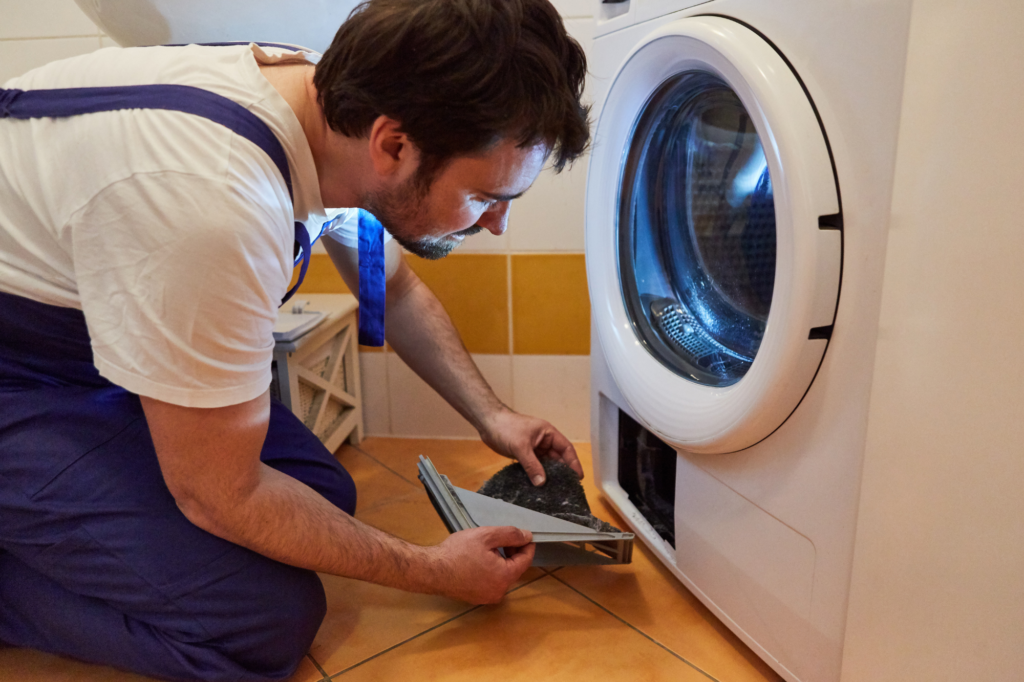
A clogged lint filter is one of the most common causes. Lint buildup restricts airflow, making it harder for the dryer to expel moisture. Similarly, a blocked vent system can prevent proper air circulation. Over time, lint and debris can accumulate in the vent, reducing efficiency.
Overloading the dryer is another factor that contributes to longer drying times. When too many clothes are placed inside, airflow is restricted, and moisture cannot escape effectively. A weak heating system may also be responsible, as insufficient heat prolongs the drying process.
The solution involves cleaning the lint filter after every use and inspecting the vent system regularly. Technicians may also check the heating element and airflow components to ensure everything is functioning correctly. Proper loading practices can significantly improve drying efficiency.
4. Dryer Making Loud Noises
A dryer should operate relatively quietly, so unusual or loud noises are a clear indication of a problem. Ignoring these sounds can lead to more serious mechanical issues.
Worn drum rollers are a common cause of noise. These rollers support the drum as it rotates, and over time, they can wear out, causing a rumbling or thumping sound. Loose components inside the dryer can also create rattling noises during operation.
A faulty motor may produce a humming or grinding sound, indicating internal damage. Additionally, a damaged or worn-out belt can cause squeaking or squealing noises as the drum rotates.
To fix this issue, technicians inspect all moving parts of the dryer. They replace worn drum rollers, tighten loose components, and repair or replace the motor or belt as needed. Addressing these problems early helps prevent further damage and ensures smooth operation.
5. Dryer Overheating
Overheating is a serious problem that can pose safety risks and damage clothing. If your dryer becomes excessively hot during operation, it requires immediate attention.
Blocked airflow is one of the main causes of overheating. When vents are clogged, hot air cannot escape, causing the temperature inside the dryer to rise. A faulty thermostat can also contribute to overheating by failing to regulate temperature properly.
Dirty vents and lint buildup further exacerbate the problem by restricting airflow. In some cases, a malfunctioning heating element may generate excessive heat, leading to overheating.
The solution involves cleaning the vent system and removing any blockages. Technicians also inspect the thermostat and heating element to ensure they are functioning correctly. Regular maintenance is essential to prevent overheating and ensure safe operation.
Importance of Professional Repair Services
Hiring expert Brant Cloth Dryer Repair Meadows services ensures:
- Accurate fault diagnosis
- Safe repairs
- Use of genuine spare parts
- Long-lasting solutions
- Warranty-backed services
DIY repairs can sometimes worsen the issue, making professional help essential.
Signs Your Dryer Needs Immediate Repair
- No heat production
- Burning smell
- Loud noises
- Drum not spinning
- Clothes not drying properly
Ignoring these signs can lead to major breakdowns.
Cost of Brant Dryer Repair in Meadows
Repair costs vary depending on the issue:
- Minor repairs: Affordable
- Heating element replacement: Moderate
- Motor repair: Higher cost
- Control board repair: Expensive
Timely maintenance helps reduce expenses.
Brant Cloth Dryer Error Codes
Modern Brant cloth dryers are equipped with advanced electronic systems that make troubleshooting easier through built-in error codes. These codes appear on the control panel when the dryer detects a fault in its internal components. While these error messages are helpful, many users find them confusing and are unsure how to respond. Understanding these error codes can help you identify problems early, avoid further damage, and ensure timely repairs.
E1 Error Code – Temperature Sensor Fault
The E1 error code usually indicates a problem with the temperature sensor, which is responsible for monitoring the heat level inside the dryer.
Causes:
- Faulty or damaged sensor
- Loose or disconnected wiring
- Wear and tear over time
Impact:
When the sensor fails, the dryer may not regulate heat properly. This can lead to under-drying or overheating of clothes.
Solution:
A technician will inspect the sensor and its wiring connections. If the sensor is defective, it will be replaced to restore proper temperature control.
E2 Error Code – Heating System Problem
The E2 error code points to an issue with the heating system, which is essential for drying clothes efficiently.
Causes:
- Burnt-out heating element
- Blown thermal fuse
- Faulty thermostat
Impact:
The dryer may run without producing heat, leaving clothes damp after the cycle.
Solution:
Professionals test the heating element, thermal fuse, and thermostat. Faulty components are replaced to restore normal heating performance.
E3 Error Code – Airflow Restriction
The E3 error code indicates restricted airflow inside the dryer.
Causes:
- Clogged lint filter
- Blocked or dirty vent system
- Obstructed exhaust duct
Impact:
Poor airflow reduces drying efficiency and may cause overheating.
Solution:
Cleaning the lint filter and vent system usually resolves this issue. Technicians may also inspect internal ducts to ensure proper airflow.
E4 Error Code – Motor Malfunction
The E4 error code signals a problem with the dryer’s motor, which is responsible for rotating the drum.
Causes:
- Worn-out motor components
- Electrical faults
- Overheating of the motor
Impact:
The drum may stop spinning, or the dryer may not start at all.
Solution:
A technician will inspect the motor and related components. In some cases, the motor may need repair or complete replacement.
E5 Error Code – Control Board Failure
The E5 error code indicates a malfunction in the control board, which acts as the brain of the dryer.
Causes:
- Power surges
- Internal circuit damage
- Software glitches
Impact:
The dryer may behave unpredictably, fail to start, or stop mid-cycle.
Solution:
Repairing or replacing the control board is required. This is a complex task that should be handled by a professional.
E6 Error Code – Door Lock Issue
The E6 error code points to a problem with the door lock or door switch.
Causes:
- Faulty door latch
- Misaligned door
- Damaged switch
Impact:
The dryer may refuse to start because it cannot detect a properly closed door.
Solution:
Technicians inspect the door mechanism and replace faulty components to ensure safe operation.
E7 Error Code – Moisture Sensor Fault
The E7 error code indicates an issue with the moisture sensor, which helps determine when clothes are dry.
Causes:
- Dirty sensor
- Electrical issues
- Sensor malfunction
Impact:
The dryer may stop too early or run longer than necessary.
Solution:
Cleaning the sensor or replacing it resolves the issue and restores accurate drying cycles.
E8 Error Code – Overheating Protection Triggered
The E8 error code appears when the dryer overheats and activates its safety mechanism.
Causes:
- Blocked vents
- Faulty thermostat
- Excess lint buildup
Impact:
The dryer may shut down automatically to prevent damage or fire hazards.
Solution:
Cleaning the ventilation system and repairing temperature control components will fix the issue.
E9 Error Code – Power Supply Issue
The E9 error code indicates a problem with the power supply.
Causes:
- Voltage fluctuations
- Loose wiring
- Faulty power cord
Impact:
The dryer may not start or may stop unexpectedly during operation.
Solution:
An electrician or technician will inspect the power connections and stabilize the supply.
Why You Should Not Ignore Dryer Error Codes
Error codes are warning signals that something is wrong with your appliance. Ignoring them can lead to:
- Serious component damage
- Increased repair costs
- Reduced efficiency
- Safety risks such as overheating or electrical faults
Taking immediate action ensures your dryer continues to function safely and efficiently.
Benefits of Timely Dryer Repairs
- Saves time and energy
- Prevents costly replacements
- Improves efficiency
- Extends appliance lifespan
- Ensures safety
Emergency Dryer Repair Services
Emergency services provide:
- Same-day repairs
- Quick diagnosis
- 24/7 availability
- Immediate solutions
Eco-Friendly Dryer Repair Practices
Modern services focus on sustainability:
- Energy-efficient repairs
- Recycling components
- Reducing waste
FAQs
1. Why is my Brant dryer not heating?
A dryer may stop heating due to a faulty heating element, blown fuse, or thermostat failure. Blocked vents can also prevent proper heating. Regular maintenance helps avoid this issue. A technician can diagnose and fix the problem efficiently.
2. Why does my dryer take too long to dry clothes?
This is often caused by clogged lint filters or blocked vents. Overloading the dryer can also reduce efficiency. Cleaning and proper usage can improve performance. Professional servicing may be required for deeper issues.
3. Is it safe to use a noisy dryer?
No, unusual noises may indicate worn-out components or internal damage. Continuing to use it can worsen the problem. It’s best to have a technician inspect it. Early repairs prevent costly breakdowns.
4. How often should I service my dryer?
It is recommended to service your dryer at least once a year. Regular maintenance improves efficiency and prevents unexpected failures. Cleaning internal components is essential. Professional servicing ensures long-term performance.
5. Should I repair or replace my dryer?
If the dryer is relatively new, repair is usually the best option. Older units with frequent issues may need replacement. A professional can assess the condition. Timely repairs often save money.
Get Your Dryer Running Like New Today
A malfunctioning dryer can quickly disrupt your daily routine, leaving you with damp clothes, wasted time, and unnecessary stress. If your appliance is showing signs of trouble—whether it’s not heating, making unusual noises, or taking too long to dry—it’s important to act before the problem worsens. Professional Brant Cloth Dryer Repair Meadows services are designed to provide fast, efficient, and reliable solutions right at your doorstep.
With skilled technicians, advanced diagnostic tools, and high-quality replacement parts, you can trust that your dryer will be restored to peak performance. Timely repairs not only improve efficiency but also help you avoid costly replacements in the future. Plus, a properly functioning dryer ensures your clothes are handled safely without damage.
Don’t let minor issues turn into major breakdowns. Book your repair service today and enjoy peace of mind knowing your appliance is in expert hands. Reliable service, quick turnaround, and long-lasting results are just a call away—bringing comfort and convenience back to your home.